
midas m32r user manual
Midas M32R User Manual: A Comprehensive Guide
This detailed manual expertly guides users through the Midas M32R’s features‚ offering comprehensive instructions for optimal performance in live sound‚ studio‚ and broadcast environments.
Welcome to the world of professional digital mixing with the Midas M32R! This powerful 40-input digital mixing console is designed for demanding live sound engineers‚ studio professionals‚ and broadcast specialists. The M32R builds upon the legacy of Midas’ renowned audio quality and combines it with cutting-edge digital technology.
This console offers an incredibly flexible architecture‚ allowing for extensive customization and control over your sound. Whether you’re reinforcing a large concert‚ recording a multi-track album‚ or broadcasting a live event‚ the M32R provides the tools you need to achieve exceptional results. This user manual will serve as your comprehensive guide‚ walking you through every aspect of the M32R‚ from initial setup to advanced features. Prepare to unlock the full potential of this remarkable mixing console!
Unboxing and Initial Setup
Carefully unpack your Midas M32R‚ ensuring all included components are present. These typically include the console itself‚ a power cable‚ and potentially documentation. Before connecting power‚ visually inspect the unit for any signs of shipping damage.
Connect the power cable to the console and a grounded outlet. Initial startup will guide you through a basic configuration process‚ including language selection and time setting. It’s crucial to download and install the latest firmware updates from the Midas website to ensure optimal performance and access to the newest features. Establish network connectivity via Ethernet for remote control and future updates. Finally‚ connect your audio sources and outputs‚ referencing the connectivity section for detailed instructions.
System Requirements and Connectivity
The Midas M32R requires a standard AC power outlet and benefits from a stable network connection via Ethernet for remote control and firmware updates. For USB audio interface functionality‚ a compatible computer running Windows or macOS is needed‚ with appropriate drivers installed – available on the Midas website.
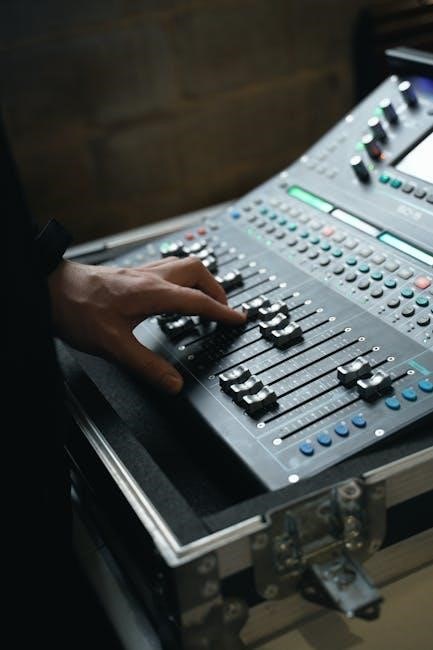
Connectivity options include 40 configurable inputs‚ 16 analog outputs‚ and digital I/O via MADI and AES/EBU. Utilize the dedicated ports for stageboxes (DL series) to expand input capacity. Ensure proper cable selection (XLR‚ TRS‚ etc.) for optimal signal transmission; Network connectivity enables control via OSC‚ MIDI‚ and dedicated Midas apps on tablets and computers‚ enhancing workflow flexibility.
Understanding the M32R Interface
The M32R boasts an intuitive layout‚ featuring a responsive control surface‚ a clear display‚ and dedicated buttons designed for efficient navigation and precise parameter adjustments.
Overview of the Control Surface
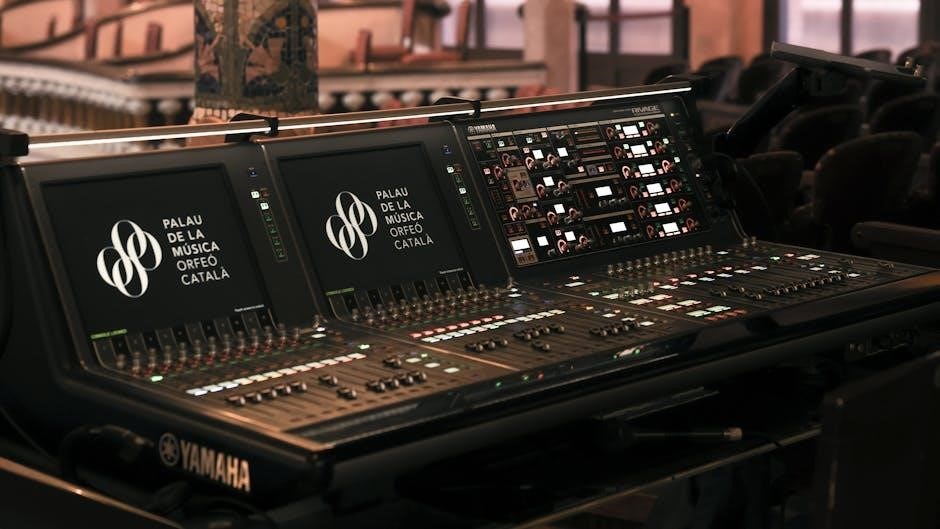
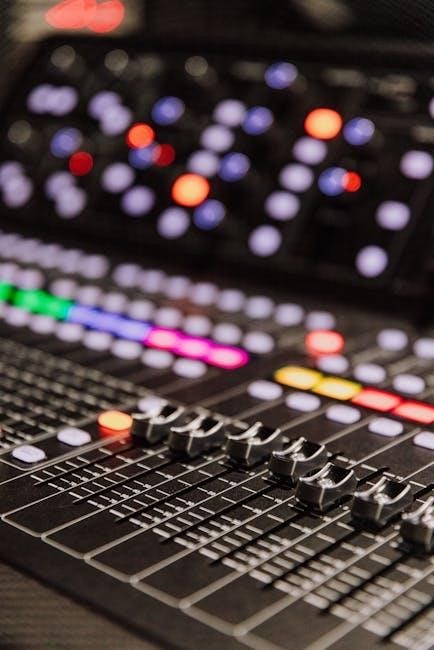
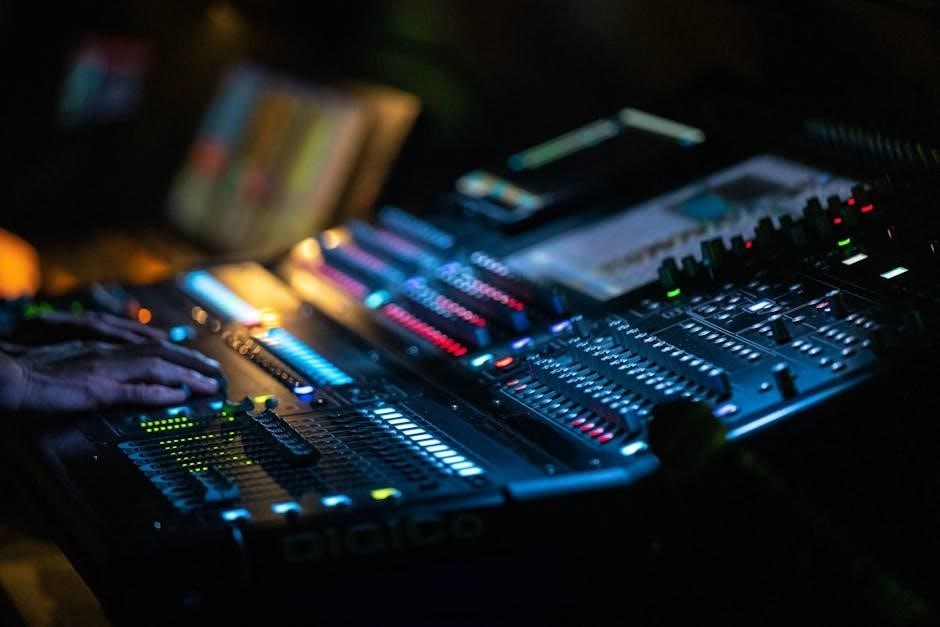
The Midas M32R’s control surface is meticulously designed for tactile and efficient operation‚ providing direct access to critical parameters. It features a central section dominated by a high-resolution LCD screen‚ flanked by dedicated encoders and buttons. These controls are logically grouped‚ representing key functions like channel strips‚ EQ‚ dynamics‚ effects‚ and routing.
The surface incorporates motorized faders‚ allowing for precise level control and automated mixing capabilities. Dedicated buttons offer instant access to scene recall‚ tap tempo‚ and user-defined macros. Layered functionality‚ accessed via shift keys‚ expands the control surface’s capabilities‚ providing access to deeper editing parameters. The overall layout prioritizes a streamlined workflow‚ enabling engineers to quickly navigate and adjust settings during live performances or studio sessions. Understanding this layout is fundamental to unlocking the M32R’s full potential.
Display Navigation and Menu Structure
The Midas M32R’s high-resolution display serves as the central hub for accessing and modifying all console parameters. Navigation is primarily achieved through a combination of rotary encoders‚ dedicated buttons‚ and a touchscreen interface. The menu structure is logically organized into distinct sections‚ including Mixing‚ Routing‚ EQ/Dynamics‚ Effects‚ and Setup.
Each section presents a hierarchical arrangement of parameters‚ allowing users to drill down to specific settings. Contextual help is readily available‚ providing detailed explanations of each function. The display utilizes a clear and intuitive visual layout‚ with color-coding and graphical representations to enhance usability. Mastering the menu structure and navigation techniques is crucial for efficiently configuring and operating the M32R‚ unlocking its extensive capabilities for professional audio applications.
Dedicated Buttons and Controls Explained
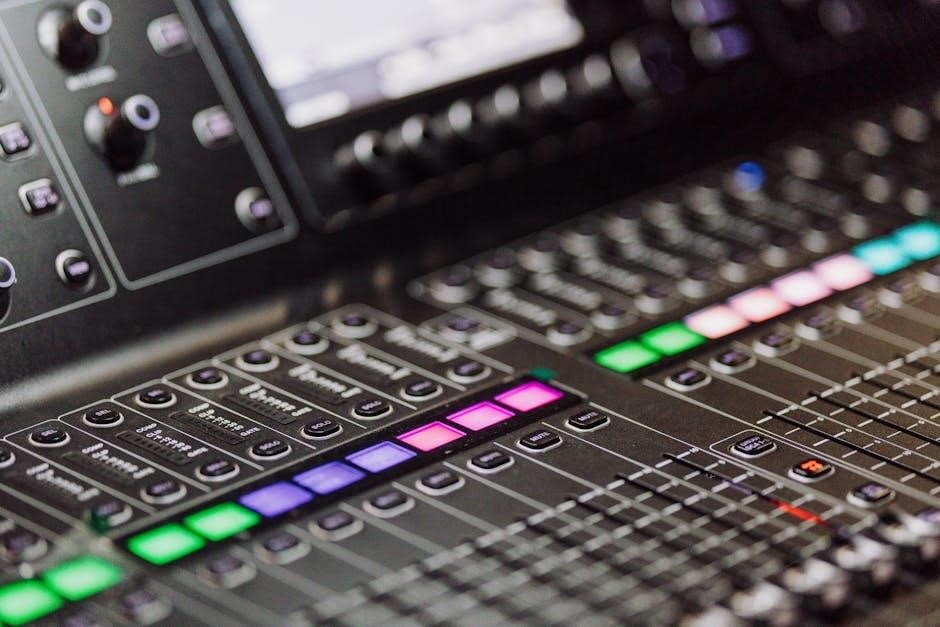
The Midas M32R boasts a comprehensive array of dedicated buttons and controls‚ designed to provide tactile and immediate access to essential functions. These include channel faders‚ pan pots‚ EQ controls‚ and send level adjustments. Dedicated buttons offer direct access to scene recall‚ talkback‚ and monitoring functions.
Rotary encoders with push functionality allow for precise parameter adjustments‚ while user-definable buttons enable customization for frequently used commands. The layout is ergonomically designed for intuitive operation‚ minimizing the need for menu diving during live performances. Understanding the function of each dedicated control is paramount for maximizing workflow efficiency and achieving seamless control over your audio mix. These physical controls complement the touchscreen interface‚ offering a versatile and responsive mixing experience.
Routing and Signal Flow
The M32R’s flexible routing capabilities allow precise control over signal paths‚ enabling complex configurations for diverse applications and optimal audio distribution.
Input Channel Configuration
Each of the Midas M32R’s input channels offers extensive configuration options‚ allowing for precise tailoring to various source materials. Users can select from a range of input types‚ including microphone‚ line‚ and AES/EBU‚ optimizing gain staging for pristine signal capture.
Detailed control over phantom power‚ high-pass filters‚ and polarity switching ensures compatibility with diverse microphones and instruments. The channel strip provides access to gate‚ compressor‚ and EQ settings‚ enabling immediate signal shaping.
Furthermore‚ users can assign inputs to different buses and matrix mixes‚ creating complex routing scenarios. Input delay functionality allows for precise alignment of signals from multiple sources‚ crucial for live sound reinforcement. The ability to name and color-code channels enhances workflow and organization‚ especially in complex setups. Proper input configuration is fundamental to achieving a professional and polished sound;
Output Bus Assignments
The Midas M32R boasts a flexible output routing system‚ allowing signals to be directed to a multitude of destinations. Users can assign input channels to various output buses‚ including main left/right‚ monitors‚ aux sends‚ and matrix mixes. Each bus offers independent level control and processing options‚ enabling customized mixes for different applications.
Precise control over bus panning and routing priorities ensures optimal signal distribution. The matrix mixing capabilities allow for complex signal combinations‚ creating tailored outputs for specific speaker systems or broadcast feeds.
Furthermore‚ dedicated outputs for headphones and AES/EBU digital connections provide additional routing flexibility. Clear visual feedback on the control surface and within the software interface simplifies the assignment process‚ ensuring accurate and efficient signal flow. Mastering output bus assignments is key to delivering a polished and professional audio experience.
Matrix Mixing Capabilities
The Midas M32R’s matrix mixing functionality unlocks unparalleled routing flexibility‚ allowing users to create complex signal blends beyond traditional bus configurations. This powerful feature enables the creation of custom output mixes derived from any combination of input channels and aux sends.
Each matrix mix acts as a dedicated output‚ offering independent level control‚ EQ‚ and dynamics processing. This is ideal for scenarios requiring multiple‚ uniquely tailored mixes – such as front-of-house‚ monitors‚ broadcast‚ and streaming feeds – all simultaneously.
The intuitive interface simplifies matrix setup‚ allowing for quick and precise signal routing. Users can visually trace signal flow and easily adjust mix levels. Mastering matrix mixing expands the M32R’s versatility‚ delivering a truly customized audio experience for diverse applications.
Mixing Functions
Explore the M32R’s extensive mixing tools‚ including precise EQ‚ dynamic processing‚ effects‚ and flexible aux sends for shaping your sound with clarity.
EQ and Dynamics Processing
The Midas M32R boasts incredibly flexible and powerful EQ and dynamics processing capabilities on every channel and bus. Each channel features a fully parametric four-band EQ‚ allowing for precise tonal shaping with adjustable frequency‚ gain‚ and Q parameters. Dynamics processing includes a compressor‚ gate‚ limiter‚ and expander‚ each offering comprehensive control over attack‚ release‚ ratio‚ threshold‚ and knee settings.
Users can choose from various compressor models‚ emulating classic analog designs‚ to add character and punch to individual instruments or vocals; The gate and expander are invaluable for cleaning up noisy signals and controlling dynamic range. Furthermore‚ sidechaining options are available for creative effects and precise control over dynamics. The M32R’s intuitive interface makes it easy to dial in the perfect sound for any source‚ offering both visual feedback and precise numerical control.
Effects and Aux Sends
The Midas M32R provides a comprehensive suite of built-in effects‚ including reverbs‚ delays‚ chorus‚ flanger‚ phaser‚ and more. These high-quality effects can be routed to individual channels‚ aux sends‚ or main outputs‚ offering immense creative flexibility. Users can customize effect parameters to tailor the sound to their specific needs‚ and multiple effects can be combined to create complex soundscapes.
The console features eight dedicated aux sends‚ each configurable as pre- or post-fader‚ allowing for versatile monitoring and effects routing options. These aux sends can be used for creating monitor mixes for performers‚ sending signals to external effects processors‚ or adding ambience to the main mix. The M32R’s flexible routing matrix ensures seamless integration with external gear and provides complete control over signal flow.
Scene Management and Recall
The Midas M32R excels in live performance scenarios thanks to its robust scene management capabilities. Scenes allow users to save and instantly recall complete console setups‚ including channel EQ‚ dynamics‚ effects‚ routing‚ and more. This feature is invaluable for bands with multiple songs or venues requiring different configurations‚ ensuring quick and seamless transitions between sets.
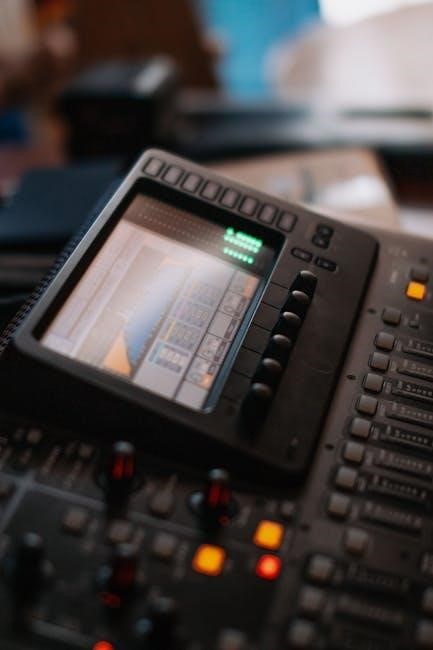
The console supports a large number of scenes‚ easily accessible via dedicated buttons and the intuitive user interface. Scenes can be organized into scene lists for efficient navigation. Furthermore‚ the M32R allows for safe scene recall‚ preventing unwanted pops or glitches during transitions. Users can also implement scene layering‚ enabling incremental changes to existing setups without overwriting the entire scene.
Advanced Features
Explore the M32R’s powerful capabilities‚ including digital stagebox integration‚ remote control options via OSC and MIDI‚ and versatile USB audio interface functionality.
Digital Stagebox Integration (DL Series)
The Midas M32R seamlessly integrates with the DL Series digital stageboxes‚ significantly expanding your input and output capabilities. This integration utilizes a robust SuperMAC network‚ providing bidirectional audio and control data transmission with exceptionally low latency. Connecting DL stageboxes allows for flexible system configurations‚ reducing cable clutter and simplifying stage setup‚ particularly in larger venues or complex setups.
Users can remotely control preamp gain‚ phantom power‚ and other parameters directly from the M32R’s control surface for each DL stagebox input. The system automatically detects connected DL series devices‚ streamlining the configuration process. This feature is invaluable for front-of-house engineers needing precise control over individual channel characteristics from a centralized location‚ enhancing workflow efficiency and sound quality.
Furthermore‚ the DL series integration supports cascading multiple stageboxes‚ offering scalability for even the most demanding applications;
Remote Control via OSC and MIDI
The Midas M32R offers extensive remote control capabilities through both OSC (Open Sound Control) and MIDI protocols‚ providing unparalleled flexibility for integration with third-party control surfaces and software. OSC allows for highly customizable control schemes‚ enabling users to map virtually any parameter to external controllers for tactile‚ hands-on operation. This is particularly useful for complex automation or specialized workflows.
MIDI implementation supports both MIDI Show Control (MSC) and standard MIDI messages‚ facilitating synchronization with lighting consoles‚ sequencers‚ and other MIDI-enabled devices. Users can remotely trigger scenes‚ adjust faders‚ and control effects parameters via MIDI‚ streamlining live performances and studio sessions.
Detailed documentation outlines the OSC and MIDI parameter maps‚ allowing developers and advanced users to create custom control solutions tailored to their specific needs.
USB Audio Interface Functionality
The Midas M32R seamlessly functions as a powerful USB audio interface‚ enabling direct recording and playback with a computer without the need for external sound cards. This feature supports multi-track recording of all input and output channels simultaneously‚ making it ideal for studio applications and virtual soundchecks.
The interface operates in class-compliant mode‚ ensuring compatibility with most major operating systems (Windows‚ macOS) without requiring specific drivers. Users can leverage their preferred Digital Audio Workstation (DAW) to capture high-quality audio directly from the M32R’s preamps and processing.
Playback from the DAW is also supported‚ allowing for comprehensive monitoring and integration with virtual instruments and effects.
Troubleshooting and Maintenance
This section details solutions for common issues‚ firmware update procedures‚ and essential cleaning guidelines to ensure the M32R’s longevity and reliable operation.
Common Issues and Solutions
Addressing typical challenges is crucial for seamless operation. If the M32R fails to power on‚ verify the power cable connection and circuit breaker. Audio dropouts can often be resolved by checking cable integrity and ensuring proper gain staging throughout the signal path.
Network connectivity problems might stem from incorrect IP address configurations; double-check network settings within the console’s menu. For unresponsive touchscreen issues‚ a soft reset (reboot) is often effective.
Unexpected behavior can sometimes be cleared by loading the latest factory presets. If encountering digital stagebox communication errors‚ confirm DL series device compatibility and proper network routing. Regularly consult the Midas support website for updated troubleshooting guides and firmware patches addressing known issues‚ maximizing your console’s performance and minimizing downtime.
Firmware Updates and Management
Maintaining up-to-date firmware is vital for optimal M32R performance and stability. Regularly check the official Midas website for the latest firmware releases‚ as updates often include bug fixes‚ new features‚ and improved compatibility. Download the firmware file to a USB drive formatted to FAT32.
Access the console’s “Update” menu‚ typically found within the “Setup” section‚ and follow the on-screen prompts to initiate the update process. Crucially‚ avoid interrupting the update‚ as this could potentially damage the console’s software.
Always back up your scenes and settings before updating‚ providing a safety net in case of unforeseen issues. After a successful update‚ verify the new firmware version within the console’s information display. Proper firmware management ensures a reliable and feature-rich mixing experience.
Cleaning and Storage
Proper cleaning and storage are essential for preserving the longevity of your Midas M32R. Regularly dust the console with a soft‚ dry cloth to prevent buildup. For more stubborn grime‚ lightly dampen the cloth with a mild‚ non-abrasive cleaning solution – avoid spraying liquids directly onto the console.
When transporting the M32R‚ always use the original packaging or a comparable protective case to shield it from physical damage. Store the console in a cool‚ dry environment‚ away from extreme temperatures‚ humidity‚ and direct sunlight.
Disconnect all cables before storage and consider using dust covers to protect the faders and controls. Careful maintenance ensures your M32R remains in optimal condition for years to come.
Specific Applications
The M32R excels in diverse scenarios‚ including live sound reinforcement‚ professional studio recording‚ and seamless integration into broadcast and streaming production workflows.
Live Sound Reinforcement
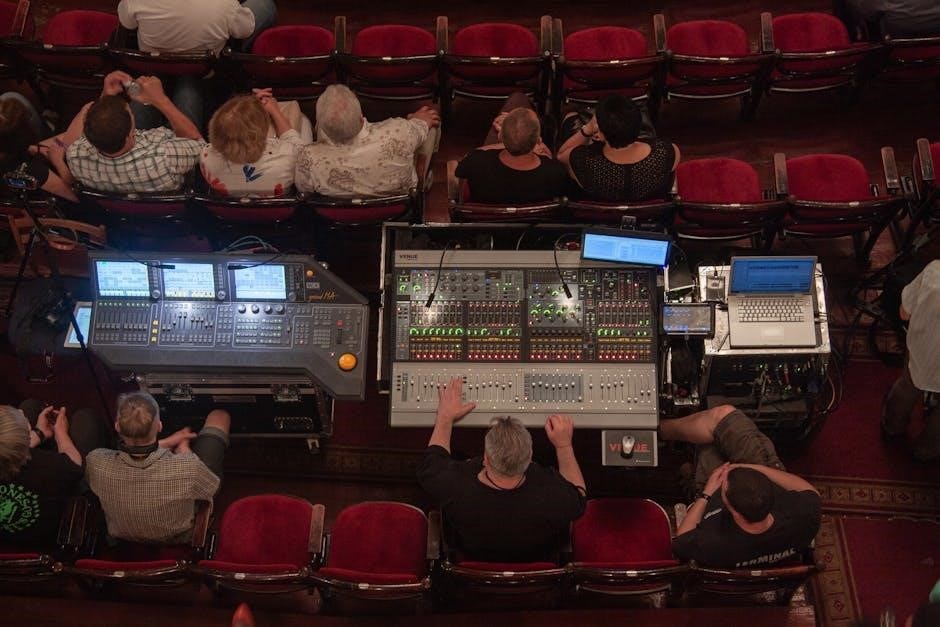
For live sound engineers‚ the Midas M32R provides unparalleled control and flexibility. Its robust processing capabilities‚ including comprehensive EQ‚ dynamics‚ and effects‚ allow for precise tailoring of sound for any venue or performance. Utilize the matrix mixing features to create dedicated monitor mixes for each musician‚ ensuring optimal stage sound.
The console’s intuitive interface and scene management system facilitate quick setup and recall of settings‚ crucial during fast-paced live events. Leverage the digital stagebox integration (DL series) for streamlined signal routing and reduced cable clutter. Furthermore‚ the M32R’s powerful DSP engine handles complex mixes with ease‚ delivering a polished and professional sound reinforcement experience. Remote control options via OSC and MIDI offer additional workflow enhancements‚ allowing engineers to adjust parameters from various locations within the venue.
Studio Recording Workflows
The Midas M32R seamlessly integrates into studio recording setups‚ functioning as a powerful front-end for your digital audio workstation (DAW). Its USB audio interface functionality allows for multi-track recording and playback directly to your computer‚ eliminating the need for external converters. Utilize the console’s precise gain staging and EQ to capture pristine recordings with minimal noise.
Leverage the M32R’s comprehensive routing options to create flexible monitoring paths for performers and engineers. The console’s recallable scenes ensure consistent setups across multiple recording sessions. Employ the built-in effects for creative sound design during tracking or mixing. Furthermore‚ the M32R’s detailed control surface provides tactile control over your DAW’s parameters‚ enhancing workflow efficiency and precision during the editing and mixing stages.
Broadcast and Streaming Setups
The Midas M32R excels in broadcast and streaming environments‚ offering robust features for managing complex audio sources. Its flexible routing capabilities allow for seamless integration with broadcast consoles and streaming software. Utilize the console’s built-in dynamics processing to ensure consistent audio levels and prevent unwanted peaks during live broadcasts.
The M32R’s scene recall functionality is invaluable for quickly switching between different program segments or show formats. Employ the aux sends to create dedicated monitor mixes for on-air talent and control room personnel. Leverage the USB audio interface for direct streaming to online platforms. Precise EQ control ensures a polished and professional sound for your audience‚ while remote control via OSC and MIDI enables streamlined operation during live events.