think alike game words pdf
Article Plan: Think Alike Game Words PDF
This article details the exploration of “Think Alike” word games delivered in PDF format, examining their mechanics, benefits, and online availability.
It will also cover playing methods, cognitive advantages, and linguistic nuances of the word “think”, alongside PDF creation and troubleshooting tips.
Think Alike games represent a fascinating intersection of psychology, linguistics, and recreational puzzling. These games, often enjoyed in social settings, challenge players to discern shared associations and common thought patterns. The core premise revolves around presenting a stimulus – a word, image, or concept – and asking participants to rapidly respond with the first thing that comes to mind.
The beauty lies in identifying the most frequent responses, revealing collective subconscious connections. This isn’t about “right” or “wrong” answers, but rather uncovering the prevailing mental links within a group. The games tap into shared cultural knowledge, experiences, and even inherent cognitive biases.
Increasingly, these games are being digitized and distributed as PDFs, offering a convenient and accessible format for both individual and group entertainment. This article will delve into the world of Think Alike games, specifically focusing on their presentation and play within the PDF medium.
What are “Think Alike” Word Games?
“Think Alike” word games are a type of psychometric exercise disguised as entertainment. They present a prompt – typically a single word – and participants quickly vocalize or write down the first associated word that springs to mind. The game’s essence isn’t about logical deduction, but rather tapping into immediate, instinctive responses.
The power of these games lies in analyzing the collective responses. Frequently appearing answers highlight common cultural understandings, shared experiences, and underlying cognitive frameworks. For example, the word “dog” might elicit responses like “cat,” “pet,” or “loyal.”
These games reveal how people categorize information and make connections. They’re often used in marketing research to understand brand associations, but are equally popular as icebreakers and party games. The PDF format allows for easy distribution and standardized prompts, enhancing the game’s usability.
The Popularity of PDF Format for Word Games
The PDF (Portable Document Format) has become a dominant choice for distributing “Think Alike” word games due to its inherent advantages. Primarily, PDFs ensure consistent presentation across various devices and operating systems – crucial for standardized game play. Unlike editable documents, PDFs prevent accidental alterations to the game prompts or instructions.
Furthermore, PDFs are easily shareable via email, websites, and social media platforms. Their relatively small file size facilitates quick downloads, even with limited bandwidth.
The format also supports embedding fonts and images, ensuring a visually appealing and professional game experience. PDFs are readily printable, allowing for offline play without requiring a digital screen. This accessibility contributes significantly to their widespread adoption for both free and commercially available “Think Alike” game collections.
Benefits of Using PDF Think Alike Games
Utilizing PDF-based “Think Alike” games offers a multitude of benefits for players and game creators alike. Accessibility is paramount; PDFs are universally readable with free viewers, eliminating software compatibility issues. Cost-effectiveness is another key advantage, as many free resources are readily available online.
PDFs promote focused engagement, minimizing distractions common with online gaming platforms; The printable nature encourages social interaction during group play, fostering face-to-face communication.
For educators, PDFs provide a convenient tool for creating customized word association exercises. The format’s stability ensures consistent game rules and prevents cheating. Ultimately, PDF “Think Alike” games deliver a simple, affordable, and engaging cognitive workout for individuals and groups.
Core Mechanics of Think Alike Games
The fundamental principle of “Think Alike” games revolves around identifying common associations to a given prompt. Players strive to articulate responses mirroring what others might conceive, revealing shared cognitive pathways. Success isn’t about correctness, but rather convergent thinking – arriving at similar answers.
Shared knowledge is crucial; prompts often leverage cultural references, common experiences, or widely understood concepts. The game highlights how collective understanding shapes individual thought processes.
A typical round involves presenting a word or phrase, followed by a timed period for players to write down their immediate associations. Comparing answers reveals intriguing patterns and unexpected connections, sparking discussion and insight.
Identifying Common Associations
The core skill in “Think Alike” games is rapidly pinpointing the most probable associations others will make. This isn’t about originality, but predicting the collective mindset. Players must quickly bypass personal, unique connections and focus on broadly held understandings.
Effective players consider the prompt’s ambiguity. A single word can evoke diverse responses, so anticipating the most likely interpretations is key. Contextual clues, if provided, become vital for narrowing down possibilities.
Successful identification relies on recognizing cultural norms, common experiences, and frequently used metaphors. The game subtly reveals the shared fabric of thought within a group, highlighting collective knowledge.
The Role of Shared Knowledge
“Think Alike” games fundamentally depend on a foundation of shared knowledge among participants. Success isn’t about individual intelligence, but the extent to which players tap into collective understanding. The prompts are designed to elicit responses rooted in common cultural references, historical events, or widely recognized concepts.
A strong base of shared experience dramatically increases the likelihood of alignment. Groups with similar backgrounds – age, education, location – will naturally exhibit higher concordance in their answers.
The game highlights the power of collective cognition, demonstrating how shared information shapes individual thought processes; It’s a fascinating exploration of the common ground that binds people together.
Types of Words Commonly Used in Think Alike Games

Think Alike games thrive on versatile word categories, prompting diverse associations. Concrete nouns – like “tree,” “car,” or “book” – are frequent, triggering immediate, shared imagery. However, the real challenge lies in abstract concepts such as “love,” “freedom,” or “justice,” demanding deeper, more subjective connections.
Action verbs – “run,” “create,” “destroy” – also feature prominently, inviting players to consider associated scenarios and consequences. The prompts often blend these categories, asking for responses to phrases like “a red idea” or “running silence.”
Effective prompts avoid overly niche or technical terms, prioritizing accessibility and maximizing the potential for widespread alignment in responses.
Concrete Nouns
Concrete nouns form a foundational element within Think Alike games, acting as readily accessible starting points for shared associations. These are tangible items – “table,” “sun,” “dog” – easily visualized and understood by most players. Their strength lies in evoking common experiences and universally recognized attributes.
The simplicity of concrete nouns doesn’t equate to a lack of depth. Prompts utilizing these words can still elicit surprising connections, revealing subtle differences in individual perspectives. For example, “beach” might conjure relaxation for one player, while another recalls a specific childhood memory.
PDF game creators often leverage concrete nouns to ease players into the game’s logic, building confidence before introducing more abstract challenges.
Abstract Concepts
Abstract concepts represent a significant leap in difficulty within Think Alike games, demanding more nuanced and imaginative responses. Words like “justice,” “freedom,” or “love” lack concrete form, relying instead on personal interpretation and cultural understanding.
These prompts often spark lively debate, as players grapple with subjective meanings and varying perspectives. The value isn’t necessarily in finding a single “correct” answer, but in exploring the breadth of human thought and the complexities of these ideas.
PDF game designers frequently include abstract concepts to challenge players’ cognitive flexibility, encouraging them to think beyond the literal and embrace ambiguity.
Action Verbs
Action verbs form a dynamic category within Think Alike games, prompting players to consider movement, processes, and interactions. Words like “build,” “create,” “destroy,” or “transform” invite responses centered around activities and their consequences.
These prompts often elicit associations with tools, environments, and the agents performing the action, fostering a wider range of connections. The focus shifts from static objects to dynamic events, stimulating more active thinking.
PDF game creators utilize action verbs to encourage players to envision scenarios and predict outcomes, enhancing their problem-solving skills and imaginative capabilities.
Finding Think Alike Game PDFs Online
Locating Think Alike Game PDFs involves utilizing various online resources. A simple web search using keywords like “Think Alike game PDF,” “word association games PDF,” or “brain teaser PDF” yields numerous results.
Platforms like educational websites, game repositories, and online learning communities frequently host these PDFs. Websites specializing in printable games and puzzles are also excellent sources. Social media groups dedicated to brain teasers often share links to downloadable content.
Remember to exercise caution when downloading files from unfamiliar sources, ensuring your antivirus software is up-to-date to prevent potential security risks.
Free vs. Paid Think Alike Game PDFs
The availability of Think Alike Game PDFs spans both free and paid options, each with distinct characteristics. Free PDFs often offer a limited selection of questions or serve as introductory samples from larger collections.
These are excellent for testing the game’s appeal before committing to a purchase. Paid PDFs generally provide a more extensive range of puzzles, varied difficulty levels, and potentially, answer keys or scoring systems.
Premium options may also include themed packs or specialized content. The choice depends on individual needs and preferences, balancing cost against the depth and breadth of the game experience.
How to Play Think Alike Games with a PDF
Playing Think Alike games with a PDF is remarkably straightforward. Typically, a PDF presents a prompt – a word or phrase – and players independently write down the first things that come to mind.
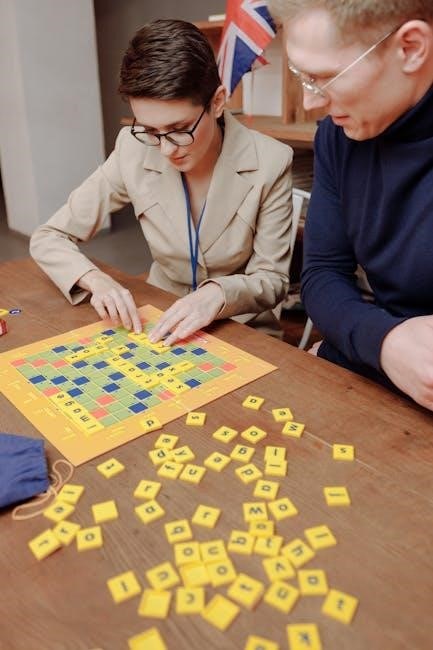
Individual play involves self-assessment, comparing personal responses against potential common associations. Group play elevates the experience; one person reads the prompt, everyone writes answers secretly, then reveals them simultaneously.
Discussion follows, analyzing similarities and differences in thought processes. A PDF format allows for easy printing and distribution, making it ideal for gatherings or classroom activities.
Individual Play
Solo engagement with Think Alike PDFs offers a unique introspective experience. Players respond to prompts, focusing on their immediate, unfiltered associations – what initially “comes to mind”. This isn’t about finding the ‘right’ answer, but revealing personal cognitive pathways.
After responding, self-analysis is key. Consider why certain words surfaced. Are they linked to personal memories, recent experiences, or deeply held beliefs? This self-reflection enhances awareness of one’s own thought patterns.
Comparing your responses to potential common answers (found online or with a group later) can highlight unique perspectives and broaden understanding.
Group Play Dynamics
Think Alike games truly flourish in a group setting, fostering lively discussion and revealing fascinating differences in perception. Players simultaneously record their responses to each prompt, then share them aloud.
The core dynamic lies in identifying commonalities and divergences. Why did most people think of “dog” when prompted with “pet”, while one person said “snake”? These discrepancies spark engaging conversations.
A facilitator can guide the discussion, encouraging players to explain their reasoning without judgment. This promotes active listening and appreciation for diverse viewpoints. It’s about understanding how people think, not simply what they think.
Analyzing Responses: What Makes a “Good” Answer?
In Think Alike games, a “good” answer isn’t necessarily the most common one; it’s about the reasoning behind it. The value lies in the unique associations and thought processes revealed. A surprising answer, well-articulated, can be more insightful than a predictable one.
Consider the context of the prompt and the player’s perspective. Was the response logical, creative, or emotionally driven? The goal isn’t to find the “right” answer, but to understand the individual’s mental landscape.
Facilitators should encourage elaboration, asking “why” to uncover the connections made. This fosters deeper understanding and appreciation for diverse cognitive styles;
The Cognitive Benefits of Think Alike Games
Think Alike games offer substantial cognitive advantages, primarily by enhancing lateral thinking skills. Players are forced to move beyond conventional responses, exploring unconventional connections and perspectives. This mental flexibility translates to improved problem-solving abilities in various contexts.
Furthermore, these games actively improve vocabulary and word association. The need to quickly generate related terms strengthens neural pathways, boosting linguistic fluency. Regular participation can expand one’s mental lexicon and refine the ability to articulate thoughts effectively.
The games also promote cognitive agility, requiring rapid shifts in focus and the consideration of multiple possibilities simultaneously.
Enhancing Lateral Thinking
Think Alike games are uniquely positioned to enhance lateral thinking, a crucial skill for innovative problem-solving. Unlike traditional puzzles with single correct answers, these games demand diverse associations, pushing players beyond predictable responses. This encourages a broader exploration of concepts and ideas.
The core mechanic of identifying common associations forces the brain to forge new connections, breaking down mental barriers and fostering creativity. Players learn to consider multiple interpretations and perspectives, a vital component of lateral thought.
By regularly engaging with these games, individuals can cultivate a more flexible and adaptable mindset, improving their ability to approach challenges from unconventional angles.
Improving Vocabulary and Word Association

Think Alike games inherently contribute to vocabulary expansion and strengthened word association skills. The game’s premise relies on players generating words linked by abstract or conceptual connections, prompting recall of a wider range of terms.
Exposure to diverse responses from fellow players further broadens linguistic horizons, introducing new vocabulary and alternative ways to conceptualize words. This reciprocal learning process is particularly effective.
Regular participation actively reinforces neural pathways associated with semantic memory, making word recall faster and more efficient. The act of consciously seeking associations strengthens these connections, leading to improved fluency and expressive ability.
Think vs. Think Of vs. Think About: A Linguistic Breakdown
Understanding the nuances of “think,” “think of,” and “think about” is crucial for grasping the subtleties of Think Alike games. “Think” represents general consideration, forming opinions. “Think of” signifies remembering or conjuring an idea – recalling a name, for example.
“Think about” implies deeper consideration of a topic, a more deliberate process of weighing options. In game contexts, “think of” prompts immediate associations, while “think about” suggests analyzing potential answers.
The distinction impacts gameplay; a quick “think of” response differs from a considered “think about” one. Recognizing these differences enhances both comprehension and strategic participation in these word association challenges.
Using “Think” with Gerunds (Doing) vs. Infinitives (To Do)
The grammatical structure following “think” significantly alters its meaning, particularly when using gerunds (-ing forms) versus infinitives (“to” + verb). “Think about doing” signifies considering an action – think about playing the game. This focuses on the process of contemplating the activity.
Conversely, “think of doing” suggests recalling or conceiving of an action, a spontaneous idea – think of winning. It emphasizes the thought itself, not the deliberation.
In Think Alike games, recognizing this distinction is key. A prompt might ask what you think of doing something, prompting a quick association, versus about doing something, requiring more analysis.
Deep Think Mode and Advanced Reasoning
The concept of “Deep Think” mode, exemplified by Gemini models, represents a leap in complex reasoning capabilities. While not directly integrated into standard Think Alike game PDFs, understanding this principle illuminates the cognitive demands of the games themselves.
These games require moving beyond surface-level associations to explore nuanced connections, mirroring the extended, intricate processing of a “Deep Think” system. Activating such a mode involves switching to advanced models like Gemini 2.5 Pro, enabling longer, more complex outputs.
Though currently limited to research and engineering, the underlying principle – sustained, deliberate thought – is central to excelling at Think Alike challenges.
Gemini Models and Deep Thinking Capabilities
Gemini models, particularly Gemini 3 and 2.5 Pro, showcase advanced “Deep Thinking” capabilities, relevant to understanding the cognitive processes involved in Think Alike games. This isn’t a feature within the PDF games themselves, but a parallel in reasoning complexity.
“Deep Think” mode allows for sustained, intricate analysis, going beyond simple pattern recognition to explore subtle connections – precisely what Think Alike games demand. It’s currently geared towards scientific research and engineering, offering extended, complex outputs.
Access is initially limited to Ultra users, highlighting its specialized nature. While not directly applicable to playing the games, it demonstrates the level of cognitive processing they implicitly encourage.
Think of: Remembering and Evaluating
“Think of” centers on recollection and initial assessment, crucial skills when tackling Think Alike games. It’s about bringing concepts to mind – “Can you think of a color associated with joy?” – and forming a preliminary judgment. This differs from deeper deliberation.
The phrase implies a search within existing knowledge, a rapid retrieval of associations. It’s used when prompting for examples (“Think of a famous scientist”) or seeking opinions (“What do you think of this idea?”).
In the context of these games, “think of” initiates the response process, the first step towards identifying shared mental links. It’s less about careful consideration and more about spontaneous association.
Think About: Considering and Deliberating
“Think about” signifies a more sustained mental effort than simply “think of.” It involves actively weighing options, exploring implications, and engaging in deliberate consideration – vital for complex Think Alike prompts. This is about analyzing a concept, not just recalling it.
Unlike the quick association of “think of,” “think about” suggests a deeper dive into a subject. For example, “Think about the consequences of deforestation.” It demands a more thoughtful response.
Within the game context, this phrase encourages players to examine the nuances of a word or idea, searching for less obvious connections and justifying their reasoning.
Think Over: Careful and Thorough Consideration
“Think over” implies the most deliberate and prolonged form of consideration, suggesting a need for repeated examination and careful weighing of all aspects. It’s more than just considering; it’s a process of meticulous review.
In the context of Think Alike games, a prompt asking you to “think over” a concept encourages exhaustive exploration of potential associations. It’s about revisiting ideas, challenging assumptions, and refining your response.

This phrase signals a higher expectation for a well-reasoned answer, demanding players move beyond initial reactions and engage in a thorough mental rehearsal of possibilities. It’s about deep analysis before responding.
Examples of Think Alike Game Questions (PDF Content)
Typical PDF content features open-ended prompts designed to elicit diverse, yet common, associations; Examples include: “What comes to mind when you think of ‘freedom’?” or “What’s the first thing you think of when you hear ‘ocean’?”
More challenging questions might be abstract: “Think of a color that represents sadness,” or “What object embodies the concept of time?” These encourage lateral thinking.
PDFs often include variations: “Think of three words associated with ‘winter’,” demanding multiple responses. Some ask for evaluations: “What do you think of artificial intelligence?”
The goal is to reveal shared mental frameworks, highlighting how individuals connect seemingly disparate concepts.
Creating Your Own Think Alike Game PDF
Designing a PDF game is straightforward. Begin with a document editor, structuring questions clearly. Prioritize open-ended prompts – avoid yes/no questions. Focus on concrete nouns, abstract concepts, and action verbs to maximize diverse responses.
Consider difficulty levels, starting with simpler associations and progressing to more complex ones. Include space for answers, perhaps lines or boxes.
Formatting is key: use a readable font and clear headings. Save the document as a PDF to ensure consistent presentation across devices.
Test your game with a small group to refine questions and assess clarity before wider distribution.
Troubleshooting Common Issues with PDF Think Alike Games
PDF viewing problems are frequent. Ensure users have a current PDF reader (Adobe Acrobat Reader is recommended). If text appears distorted, check the PDF’s font embedding settings during creation.
Interactive form fields might not function on all readers; test thoroughly. Consider providing a separate answer sheet if interactivity is crucial.
Printing issues can arise. Verify printer settings and paper size. Large files may print slowly or incompletely.
Accessibility is vital: add alt text to images for screen readers. If players struggle with question clarity, revise the wording for better understanding.
The Enduring Appeal of Think Alike Games
Think Alike games, particularly in accessible PDF format, continue to captivate due to their simplicity and cognitive benefits. They foster lateral thinking, vocabulary expansion, and social interaction.
The PDF format’s portability and ease of distribution contribute to their lasting popularity, offering a convenient and cost-effective entertainment option.
Whether enjoyed individually or in groups, these games tap into the universal human desire to understand how others perceive the world.
As long as the need for mental agility and connection persists, Think Alike games will undoubtedly remain a cherished pastime, readily available through the power of digital PDFs.