palestine by joe sacco pdf
Palestine by Joe Sacco PDF: A Comprehensive Overview
Joe Sacco’s Palestine, available as a PDF, is a seminal work of graphic journalism. Published in 1996, it details Sacco’s experiences in the West Bank and Gaza Strip,
offering a poignant look into the Israeli-Palestinian conflict.
Historical Context of the Work
Joe Sacco’s Palestine emerged during a complex period of the Israeli-Palestinian conflict, specifically the aftermath of the Oslo Accords in the mid-1990s. While these accords offered a framework for peace, the reality on the ground remained fraught with tension, occupation, and displacement. Sacco’s travels, documented in the work, took place in 1991 and 1992, a time of heightened unrest and uncertainty.
The First Intifada (1987-1993) had recently subsided, leaving a lasting impact on Palestinian society and fueling a desire for self-determination. Simultaneously, the Gulf War (1990-1991) shifted international attention and dynamics within the region. Sacco’s work doesn’t focus on grand political narratives but rather on the everyday lives of Palestinians living under occupation.
It’s crucial to understand that Palestine wasn’t created as immediate reportage; it was a delayed account, allowing Sacco to reflect and meticulously craft his narrative. This timing is significant, as it captures a specific moment before further escalations and shifts in the political landscape, offering a valuable historical snapshot of a deeply contested territory.
Joe Sacco’s Background and Approach to Journalism
Joe Sacco is a Maltese-American cartoonist and journalist renowned for pioneering the genre of graphic journalism. Before Palestine, Sacco worked as a traditional journalist, but felt limited by the conventional formats. He sought a more immersive and nuanced way to convey the complexities of conflict and human experience.
His background isn’t rooted in formal war correspondence; instead, he approaches his subjects as an observer and listener, prioritizing personal narratives over broad political analysis. This is evident in Palestine, where he embeds himself within Palestinian communities, documenting their stories through extensive interviews and detailed observational drawings.
Sacco’s approach is characterized by a commitment to meticulous research and a self-aware acknowledgement of his own positionality as an outsider. He doesn’t present himself as an objective reporter, but rather as a participant in the narrative, openly acknowledging his biases and limitations. This honesty, combined with his distinctive visual style, sets his work apart and contributes to its enduring impact.
The Genre: Graphic Journalism and its Significance
Graphic journalism, also known as comics journalism, merges the storytelling power of comics with the investigative rigor of traditional reporting. Palestine is widely considered a foundational text in establishing this genre, demonstrating its potential to convey complex realities in a uniquely compelling way.
Unlike conventional journalism, graphic journalism utilizes sequential art – the arrangement of images and text – to create a visceral and immersive experience for the reader. This allows for a deeper emotional connection to the subject matter, fostering empathy and understanding.
The significance of this genre lies in its accessibility. Comics, often perceived as a medium for children, can reach audiences who might not engage with lengthy articles or documentaries. Palestine, in particular, brought the Israeli-Palestinian conflict to a wider readership, challenging preconceived notions and prompting critical reflection. It proved that comics could be a powerful tool for serious journalism, paving the way for subsequent works exploring diverse social and political issues.
Content Overview: Key Locations and Events Depicted
Palestine by Joe Sacco meticulously documents his travels throughout the West Bank and Gaza Strip in 1991-1992. The narrative isn’t a linear recounting of the conflict, but rather a series of interconnected vignettes experienced during his time there.
Key locations prominently featured include Hebron, a city marked by deep religious and political divisions, and Rafah, a refugee camp in Gaza facing constant demolition and hardship. Sacco’s journey takes him through various checkpoints, settlements, and Palestinian homes, offering a ground-level perspective of daily life under occupation.
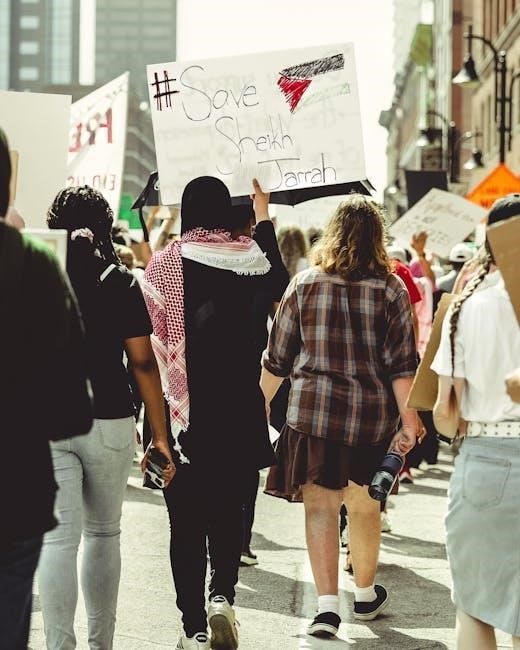
The work depicts specific events like the First Intifada’s aftermath, the tensions surrounding the Ibrahimi Mosque in Hebron, and the struggles faced by Palestinian refugees. Sacco doesn’t focus on grand political narratives, but instead on the personal stories of individuals – their frustrations, fears, and resilience. These intimate portrayals, combined with detailed observational reporting, create a powerful and nuanced depiction of the region’s complexities.
Gaza Strip: Life Under Occupation
Joe Sacco’s depiction of the Gaza Strip in Palestine is particularly harrowing, illustrating the severe restrictions and hardships imposed by Israeli occupation. He focuses significantly on Rafah refugee camp, portraying its overcrowded conditions and the constant threat of home demolitions carried out by Israeli forces.
Sacco details the daily struggles of Gazan residents – limited access to resources, economic hardship, and the psychological toll of living under constant surveillance and military control. He recounts stories of families losing their homes, the arbitrary nature of the demolitions, and the pervasive sense of hopelessness.
The narrative emphasizes the physical and emotional barriers that confine Gazans, including checkpoints, border closures, and the ever-present threat of violence. Sacco’s interviews reveal the resilience of the people, but also their deep frustration and anger. He avoids simplistic narratives, showing the complexities of life within the camp and the diverse perspectives of its inhabitants, offering a stark portrayal of life under occupation.
The West Bank: Settlements and Palestinian Resistance
Joe Sacco’s coverage of the West Bank in Palestine centers on the impact of Israeli settlements and the various forms of Palestinian resistance. He travels through Hebron, documenting the presence of settlers within the city and the tensions it creates with the Palestinian population. Sacco illustrates how settlements disrupt Palestinian life, fragment communities, and control access to resources.
The graphic novel portrays the daily harassment and violence faced by Palestinians at the hands of settlers and the Israeli military. He details the restrictions on movement, the impact on Palestinian businesses, and the constant fear of displacement. Sacco also explores the different forms of resistance, from non-violent protests to armed struggle, presenting a nuanced view of Palestinian agency.
He interviews both Palestinians and Israelis, offering contrasting perspectives on the conflict and the settlements. The narrative highlights the power imbalances inherent in the situation and the challenges faced by Palestinians in resisting occupation, showcasing the complexities of the West Bank landscape.
Jerusalem: A Contested City
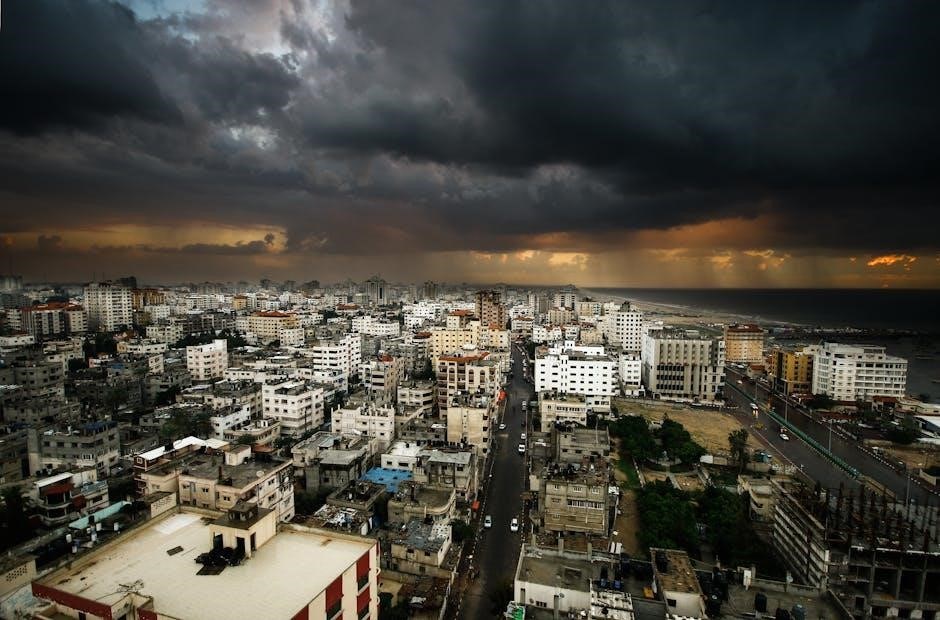
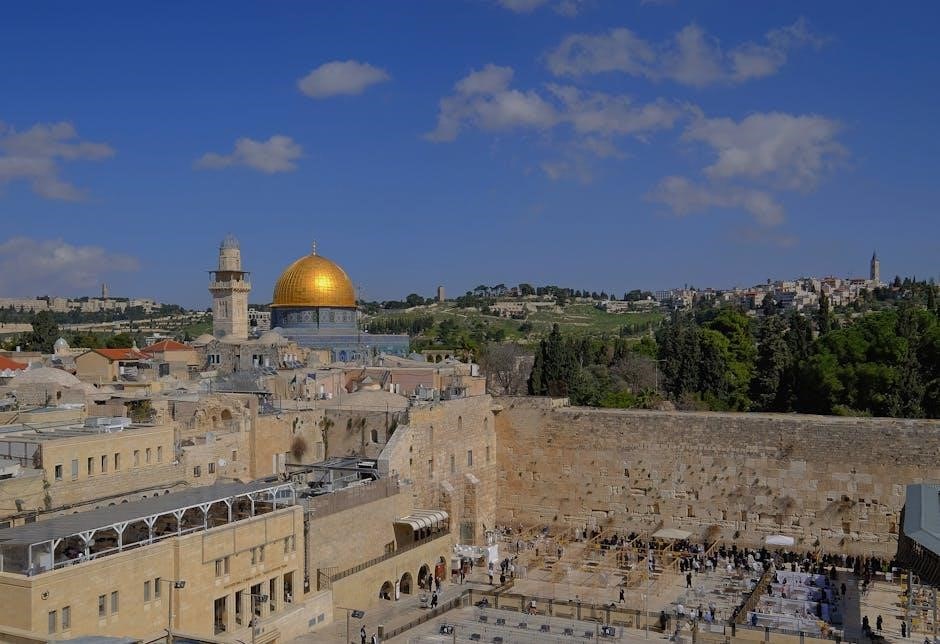
Joe Sacco’s depiction of Jerusalem in Palestine focuses on the city’s deeply contested nature and its symbolic importance to both Israelis and Palestinians. He explores the Old City, highlighting the religious and historical significance of sites sacred to Judaism, Christianity, and Islam, and the resulting complexities of control and access.
Sacco illustrates the physical and political divisions within Jerusalem, including the presence of checkpoints and the separation between East and West Jerusalem. He documents the experiences of Palestinians living in East Jerusalem, facing restrictions on movement, home demolitions, and discrimination. The narrative reveals the challenges of maintaining Palestinian identity and culture within a city increasingly dominated by Israeli control.
Through interviews, Sacco presents diverse perspectives on Jerusalem’s status and future. He captures the emotional weight of the city for both Israelis and Palestinians, showcasing the conflicting narratives and the deep-seated historical claims that fuel the ongoing conflict, emphasizing Jerusalem’s role as a central point of contention.
Sacco’s Interviewing Techniques and Perspectives
Joe Sacco’s approach to interviewing in Palestine is central to the work’s power and complexity. He doesn’t present himself as a neutral observer, but rather acknowledges his own positionality as a Western journalist. Sacco employs a direct, inquisitive style, often pressing interviewees for details and challenging their narratives, aiming for a nuanced understanding of their experiences.
He spends considerable time building rapport with his subjects, often engaging in lengthy conversations and repeated interviews. This allows him to gain their trust and elicit more personal and revealing accounts. Sacco’s perspective is shaped by his commitment to documenting the everyday realities of life under occupation, focusing on the human cost of the conflict.
He avoids grand political statements, instead prioritizing the individual stories of Palestinians and Israelis. This focus on personal narratives, combined with his detailed observational skills, creates a powerful and empathetic portrayal of a deeply complex situation, offering a unique journalistic perspective.
Palestinian Voices: Representation and Authenticity
Palestine by Joe Sacco grapples with the complexities of representing Palestinian voices authentically. Sacco doesn’t claim to be a Palestinian voice, but strives to provide a platform for Palestinians to speak for themselves. He achieves this through extensive interviews and detailed depictions of their daily lives, allowing their experiences to take center stage.
However, the work has faced criticism regarding the inherent challenges of a Western journalist representing another culture. Sacco acknowledges this limitation, often including his own internal reflections on the process of translation and interpretation. He presents a diverse range of Palestinian perspectives, showcasing differing opinions and experiences within the community.
The graphic format itself contributes to the authenticity, as Sacco’s illustrations capture the emotional weight of the stories and the physical realities of life under occupation. While acknowledging the impossibility of perfect representation, Palestine offers a powerful and empathetic portrayal of Palestinian experiences, sparking crucial conversations about voice and perspective.
Criticisms of the Work: Bias and Perspective
Palestine by Joe Sacco, while lauded for its innovative approach, has faced criticisms concerning potential bias and perspective. Some critics argue that Sacco’s position as a Western journalist inevitably shapes the narrative, potentially influencing the selection of stories and the framing of events.
Concerns have been raised about the limited inclusion of Israeli perspectives, leading to accusations of imbalance. While Sacco focuses on Palestinian experiences, the absence of substantial Israeli viewpoints is seen by some as a significant omission. Others question the extent to which Sacco’s personal interpretations color the representation of events, despite his attempts at objectivity.
Despite these critiques, proponents emphasize Sacco’s transparency regarding his own role in the narrative and his commitment to presenting Palestinian voices directly. The work’s power lies in its detailed documentation of Palestinian life, even if it doesn’t offer a fully comprehensive or neutral account of the conflict.
The Visual Style: Black and White and its Impact
Joe Sacco’s choice of a stark black and white visual style in Palestine is a crucial element of the work’s impact. The monochromatic palette lends a documentary feel, reminiscent of photojournalism and historical reportage, grounding the narrative in a sense of realism and immediacy.
The lack of color avoids any potential aestheticization of violence or suffering, instead presenting the harsh realities of life under occupation in a raw and unflinching manner. The detailed linework and meticulous paneling contribute to a sense of claustrophobia and tension, mirroring the confined spaces and oppressive atmosphere experienced by Palestinians.
Furthermore, the black and white aesthetic evokes a sense of timelessness, suggesting that the depicted struggles are not isolated incidents but part of a long and ongoing history. This stylistic choice powerfully reinforces the work’s themes of displacement, loss, and the enduring human cost of conflict.
The Role of Cartography in the Narrative
Joe Sacco’s Palestine uniquely integrates cartography as a vital narrative tool, extending beyond simple geographical representation. Maps aren’t merely background elements; they actively shape the reader’s understanding of the Israeli-Palestinian conflict’s spatial dimensions and the constraints imposed upon Palestinian life.
Sacco meticulously depicts the fragmentation of the West Bank through detailed maps illustrating checkpoints, settlements, and restricted zones. These visual representations emphasize the physical barriers to movement and the shrinking of Palestinian territory. The maps highlight how political boundaries directly impact daily existence, showcasing the imposed limitations on freedom and access.
Moreover, the cartographic approach underscores the contested nature of the land itself. By visually demonstrating the layers of occupation and displacement, Sacco challenges conventional understandings of ownership and territorial claims. This innovative use of cartography transforms the map into a powerful instrument of political commentary and empathetic storytelling.
Reception and Awards: Critical Acclaim and Recognition
Joe Sacco’s Palestine garnered significant critical acclaim upon its release and continues to be lauded as a landmark achievement in graphic journalism. The work was widely praised for its innovative blend of reportage, personal narrative, and artistic expression, challenging conventional approaches to conflict reporting.
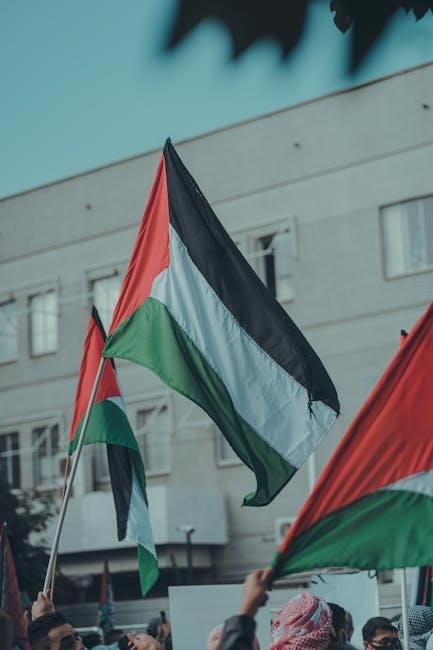
Critics highlighted Sacco’s commitment to portraying the complexities of the Israeli-Palestinian conflict through the voices of those directly affected. The book’s unflinching depiction of life under occupation resonated deeply with readers and sparked important conversations about the ethical responsibilities of journalism.
Palestine received numerous awards and accolades, including the American Book Award in 1996. It has been included on numerous “best of” lists and remains a staple in university courses focusing on journalism, political science, and visual studies. The PDF version’s accessibility has further broadened its reach, ensuring continued engagement with this pivotal work.
Impact on Subsequent Graphic Journalism
Joe Sacco’s Palestine fundamentally reshaped the landscape of journalism, establishing graphic journalism as a legitimate and powerful form of reporting. Before its publication, comics were rarely considered a serious medium for tackling complex political and social issues. Sacco’s work demonstrated the unique capacity of the graphic novel to convey nuanced narratives and emotional depth.
The success of Palestine inspired a new generation of journalists and artists to explore the possibilities of combining visual storytelling with investigative reporting. It paved the way for works like Art Spiegelman’s Maus to gain wider recognition and acceptance.
The readily available PDF version of Palestine has played a role in its influence, allowing aspiring graphic journalists to study Sacco’s techniques and approach. His emphasis on meticulous research, on-the-ground reporting, and ethical representation continues to serve as a benchmark for the field, solidifying his legacy as a pioneer.
Availability of the PDF Version and Copyright Issues
Finding a legally sanctioned PDF version of Joe Sacco’s Palestine can be challenging. While the book is widely available in print from retailers like Amazon and Barnes & Noble, official digital distribution is limited. Unauthorized PDF copies circulate online, raising significant copyright concerns.
Downloading or distributing these unauthorized PDFs constitutes copyright infringement, potentially leading to legal repercussions. Supporting the creator and publisher, Fantagraphics, requires purchasing a legitimate copy. The book’s enduring popularity fuels the demand for accessible digital formats, but rights holders must balance accessibility with protecting intellectual property.
Some academic institutions may provide access to the PDF through library subscriptions for research purposes. However, widespread, legal digital availability remains an issue. Readers interested in supporting Sacco’s work are encouraged to purchase the print edition or explore legally licensed ebook options when available.
Academic Analysis and Scholarly Articles
Joe Sacco’s Palestine has garnered substantial academic attention, becoming a cornerstone in discussions of graphic journalism, conflict representation, and visual storytelling; Scholarly articles frequently analyze Sacco’s innovative approach to reporting, blending autobiographical narrative with investigative journalism.
Researchers explore the ethical implications of representing trauma and the complexities of portraying a politically charged conflict. Analyses delve into Sacco’s deliberate artistic choices, particularly his use of black and white imagery and cartographic elements, and their impact on the narrative’s emotional weight and credibility.
Studies examine how Palestine challenges traditional journalistic conventions and offers a unique perspective on the Israeli-Palestinian conflict, often focusing on the voices and experiences of Palestinians. Databases like JSTOR and academic search engines yield numerous articles dissecting the work’s historical context, narrative structure, and lasting influence on the field of comics studies and journalism.
Related Works by Joe Sacco
Joe Sacco’s body of work extends far beyond Palestine, showcasing a consistent commitment to in-depth, on-the-ground reporting through the medium of comics. Footsteps in the Desert (2006) details his journey to the Western Sahara, documenting the struggles of the Sahrawi people. Safe Area Gorazde (2000) offers a harrowing account of life in a Bosnian enclave during the Bosnian War, earning him significant acclaim.
Further exploring themes of conflict and displacement, The Fixer (2003) investigates the experiences of a Bosnian journalist, while War’s End (2010) revisits the aftermath of the Bosnian conflict. Sacco’s work also includes journalistic comics focusing on environmental issues and social justice, such as Payback (2008), which examines the predatory lending industry.
These works, like Palestine, demonstrate Sacco’s dedication to immersive reporting, detailed observation, and a nuanced portrayal of complex geopolitical situations, solidifying his position as a leading figure in graphic journalism;