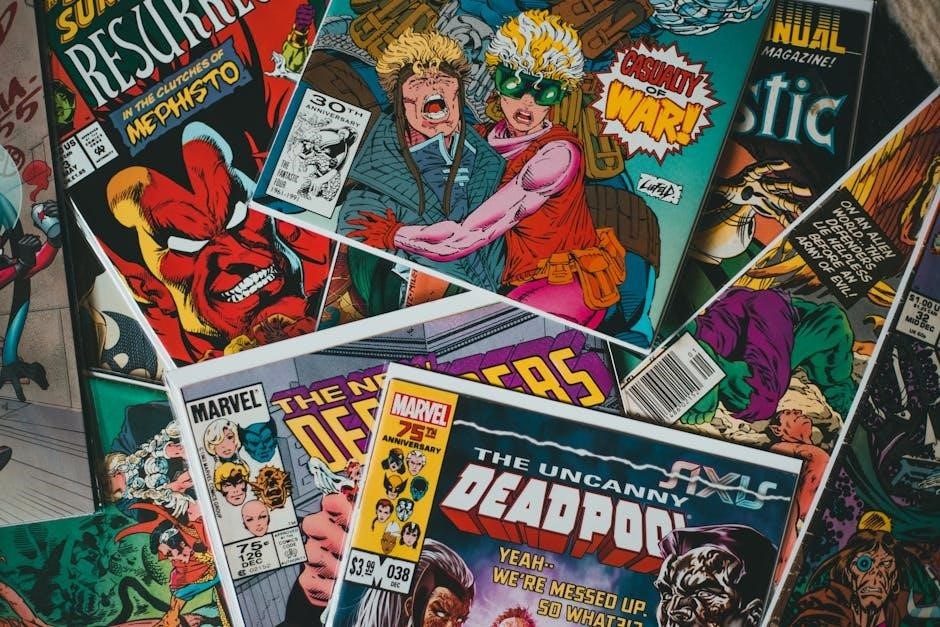
forbidden fantasy comic book pdf
Delving into forbidden fantasy comics, often found as PDFs, unlocks a captivating world of rebellious artistry and historically significant, suppressed narratives.
Defining “Forbidden” in Comic Book History
The term “forbidden” regarding fantasy comic books, particularly those circulating as PDFs today, isn’t simply about explicit content. It encompasses narratives and imagery challenging societal norms, pushing boundaries of taste, or facing censorship due to political or moral objections.
Early examples often featured mature themes, violence, or subversive commentary absent in mainstream publications. These comics weren’t necessarily illegal, but distribution was limited, leading to their scarcity and eventual cult status.
The digital age, and the proliferation of PDF formats, has ironically both preserved and complicated this definition, offering access while raising copyright concerns.
The Rise of Digital Archives & PDF Formats
The advent of digital archives dramatically altered access to forbidden fantasy comics, with PDF formats becoming a dominant medium. Scanning and online distribution circumvented traditional scarcity, allowing wider circulation of previously hard-to-find titles.
PDFs offered portability and ease of storage, fueling a surge in digital collecting. While initially driven by piracy, legitimate archival efforts also emerged, aiming to preserve fragile originals.
This shift presented both opportunities and challenges, impacting copyright, preservation, and the very nature of comic book collecting itself.
Historical Context: Comics and Censorship
Comics faced intense censorship, driving “forbidden” content underground; PDF accessibility now offers a unique lens to revisit this controversial, artistic history.
The Comics Code Authority and its Impact
Established in 1954, the Comics Code Authority (CCA) drastically altered the landscape of American comic books. Born from public concern over juvenile delinquency, it imposed strict guidelines, effectively self-censoring the industry.
This impacted fantasy comics significantly, suppressing mature themes, horror elements, and overt sexuality – precisely the content now sought in “forbidden” PDF collections. Creators either adhered to the Code, limiting their artistic expression, or ventured into the underground comix scene, bypassing these restrictions.
The CCA’s influence waned over time, but its legacy remains, shaping the availability and historical context of these now-rare and digitally preserved works.
Underground Comics: A Counter-Cultural Movement
Emerging in the late 1960s, underground comics represented a direct rebellion against the constraints of the Comics Code Authority. These independently published works fearlessly explored taboo subjects – sexuality, drug use, political dissent, and mature fantasy themes – previously unseen in mainstream comics.
Many “forbidden fantasy” PDFs originate from this era, showcasing raw, experimental artwork and narratives. Creators like Robert Crumb and Gilbert Shelton pushed boundaries, fostering a counter-cultural aesthetic.
The movement’s impact extended beyond comics, influencing art, music, and social attitudes, and providing a crucial outlet for alternative voices.
Early Examples of “Forbidden” Content
Before the full flowering of the underground movement, hints of “forbidden” content existed. EC Comics, despite facing scrutiny, published tales with subversive undertones in the 1950s, often featuring horror and science fiction elements that challenged societal norms.
Early examples of fantasy, like some pre-Code horror comics, contained suggestive imagery or themes deemed inappropriate for younger audiences.
These early instances, often now available as scanned PDFs, laid the groundwork for the more explicit and experimental works that followed, demonstrating a growing desire for mature storytelling.
The Appeal of Collecting Forbidden Fantasy Comics
PDFs offer accessible entry into collecting rare, controversial fantasy comics, blending historical intrigue with the thrill of discovering previously unseen artistic expression.
Nostalgia and Historical Significance
For many, accessing forbidden fantasy comics via PDF evokes a powerful nostalgia, reconnecting them with a rebellious era of artistic expression. These digital copies aren’t merely relics; they’re windows into the social and political climates that fostered their creation and subsequent suppression.
The PDF format allows preservation of these fragile pieces of history, offering researchers and enthusiasts alike the chance to study the themes, artwork, and cultural impact of comics that once challenged societal norms.
They represent a counter-narrative, a glimpse into alternative visions of fantasy, and a testament to the enduring power of independent creators.
Rarity and Investment Potential
While physical copies of forbidden fantasy comics command high prices, even digital PDFs of rare issues can hold surprising investment potential. Scarcity, driven by limited print runs and historical censorship, fuels demand among collectors.
High-quality scans of key titles, particularly those by influential underground artists, are increasingly sought after.
However, assessing value requires careful consideration of scan quality, provenance (if known), and the overall condition of the digital file. The PDF format, while convenient, doesn’t replicate the tactile experience of a physical comic, impacting perceived value, yet accessibility broadens the collector base.
The Thrill of the “Unseen”
A significant draw of collecting forbidden fantasy comic book PDFs lies in accessing content historically shielded from mainstream audiences. These comics often pushed boundaries, exploring mature themes and challenging societal norms, resulting in censorship and limited distribution.
Discovering these “lost” works offers a unique connection to a rebellious artistic past.
The PDF format democratizes access, allowing enthusiasts to experience the raw, unfiltered creativity that once existed on the fringes. It’s a thrill to uncover narratives that were once deemed too controversial, offering a glimpse into alternative visions of fantasy and societal critique.

Sourcing Forbidden Fantasy Comic Book PDFs
Finding these digital treasures requires navigating legal landscapes and utilizing online archives, forums, and communities dedicated to preserving rare comic book content.
Legal Considerations & Copyright
Navigating the legalities of obtaining and possessing forbidden fantasy comic book PDFs is crucial. Copyright law protects creators’ rights, even for older or obscure works. Downloading copyrighted material without permission constitutes infringement, potentially leading to legal repercussions.
Public domain status offers a safe haven, but determining this can be complex. Many “forbidden” comics, while rare, are still actively protected. Respecting intellectual property is paramount; supporting creators through legitimate purchases encourages continued artistic expression.
Always verify the source and licensing before downloading any PDF to ensure compliance with copyright regulations and ethical collecting practices.
Archive.org and Public Domain Resources
Internet Archive’s Archive.org is a valuable resource for locating public domain comic books, including some early fantasy titles. However, finding “forbidden” content requires diligent searching, as categorization can be inconsistent.
HathiTrust Digital Library and Project Gutenberg also offer digitized comics, though their selection of fantasy material is more limited. Always confirm the copyright status before downloading; Archive.org clearly indicates public domain works.
Remember that even within these archives, mislabeling can occur, so cross-referencing with copyright databases is recommended for responsible PDF acquisition.
Dedicated Online Forums and Communities
Numerous online forums and communities cater to collectors of rare and “forbidden” comic book PDFs. These platforms often host discussions, trade recommendations, and occasionally, links to digitized copies – though caution is advised regarding legality.
Sites like Comic Book Resources (CBR) and Reddit’s r/comicbooks can be starting points, but specialized forums focused on silver age or underground comics are more fruitful.
Participate respectfully, understand community rules regarding sharing copyrighted material, and prioritize legal acquisition methods whenever possible.
Technical Aspects of PDF Comic Book Collection
PDFs dominate digital forbidden fantasy comic collections, offering accessibility, but file size and format choices (CBR, CBZ) impact reading experience and storage.
File Formats: CBR vs. CBZ vs. PDF
When collecting forbidden fantasy comics digitally, understanding file formats is crucial. PDF is a universal standard, ensuring broad compatibility, but can result in larger file sizes. CBR and CBZ are essentially ZIP archives containing comic images; CBZ uses ZIP compression, while CBR utilizes RAR.
These archive formats offer smaller file sizes and often retain image quality better than PDFs. Comic book reader software efficiently extracts and displays images from CBR/CBZ files. However, they require dedicated readers, unlike PDFs which open in most browsers. For forbidden content, PDF’s universality can be advantageous for sharing within legal boundaries.
Optimizing PDFs for Reading on Different Devices
Optimizing PDF forbidden fantasy comics ensures a pleasant reading experience across various devices. Reducing file size through compression is key, balancing quality and load times. Utilizing OCR (Optical Character Recognition) makes text searchable, valuable for research.
Employing proper tagging and metadata improves accessibility. Consider reflowing text for smaller screens, though this may disrupt the original layout. Zoom functionality is essential. For older comics, careful color correction can enhance readability. Regularly testing on different devices – tablets, phones, computers – guarantees optimal viewing of these rare finds.
Metadata and Organization of Digital Libraries
Robust metadata is crucial for managing a digital library of forbidden fantasy comic book PDFs. Include title, creator, publication date, publisher, and genre. Tagging with keywords like “underground comics,” “adult fantasy,” or specific artists aids searching.
Consistent file naming conventions (e.g., Year-Month-Title.pdf) are vital. Folder structures can categorize by creator, era, or genre. Consider using comic book management software like ComicRack or Calibre to automate metadata tagging and library organization, ensuring easy access to these rare digital treasures.

Popular Titles & Creators in Forbidden Fantasy
Exploring PDFs reveals works by artists like Vaughn Bode, Skip Williamson, and creators of Zap Comix, showcasing groundbreaking, often controversial, fantasy narratives.
Notable Underground Comics Artists
The realm of forbidden fantasy PDFs showcases a vibrant array of artists who defied conventional norms. Robert Crumb’s Keep on Truckin’ and Fritz the Cat are iconic examples, pushing boundaries with satirical and often explicit content.
Vaughn Bode’s Lizard and Gilbert Shelton’s Fabulous Furry Freak Brothers offered psychedelic and counter-cultural perspectives. Skip Williamson’s work frequently explored themes of alienation and social commentary.
These artists, and many others, utilized the freedom of the underground comics scene to create visually striking and intellectually stimulating works, now readily accessible through digital archives and PDF formats.
Key Titles from the 1970s & 80s
The 1970s and 80s witnessed a surge in provocative fantasy comics, many now circulating as PDFs. Elf with a Gun, by Richard Corben, blended fantasy and erotica, becoming a landmark title. Heavy Metal magazine, though not solely fantasy, frequently featured stunning and often explicit artwork.
Cerebus, by Dave Sim, offered a complex and lengthy satirical fantasy epic. Denial, by Mike Hoffman, explored mature themes with a unique artistic style. These titles, alongside numerous smaller press publications, represent a golden age of independent, boundary-pushing comics.
Influence on Modern Fantasy Comics
The spirit of 1970s and 80s “forbidden” fantasy, readily available now in PDF form, profoundly impacted modern comics. Creators like Jamie Delano and Neil Gaiman drew inspiration from the mature themes and artistic freedom of titles like Cerebus and Heavy Metal.
This influence manifests in darker, more complex narratives and a willingness to explore adult content. Independent publishers, building on the legacy of underground comics, continue to push boundaries; The accessibility of these older PDFs allows contemporary artists to study and learn from their predecessors, fostering innovation.

Preservation and Restoration of Digital Comics
Safeguarding forbidden fantasy comic book PDFs requires diligent backups and employing digital restoration techniques to combat file corruption and data loss.
Preventing Data Loss and File Corruption
For collectors of forbidden fantasy comic book PDFs, proactive data management is crucial. Implement a robust backup strategy utilizing multiple storage locations – cloud services, external hard drives, and network-attached storage (NAS) devices are all valuable.
Regularly verify the integrity of your PDF files using checksum tools to detect subtle corruption. Consider redundant storage solutions like RAID configurations for physical drives.
Avoid storing valuable PDFs on a single point of failure.
Furthermore, be mindful of the longevity of storage media; periodically migrate files to newer formats and devices to prevent obsolescence and ensure continued accessibility to these rare treasures;
Digital Restoration Techniques
Restoring scanned forbidden fantasy comic book PDFs often requires specialized software. Tools like Photoshop and GIMP allow for adjustments to contrast, brightness, and color balance, mitigating the effects of aging and poor scanning.
Dust and scratch removal filters can significantly improve image clarity, while layer masking enables selective corrections.
Advanced techniques include utilizing AI-powered upscaling to increase resolution without significant quality loss.
Careful consideration must be given to preserving the original aesthetic; avoid over-processing, which can detract from the comic’s historical character.
The Role of Fan Communities in Preservation
Dedicated fan communities are vital for preserving forbidden fantasy comic book PDFs. These groups often collaborate on scanning projects, meticulously archiving rare issues and sharing high-quality digital copies.
They contribute significantly to metadata creation, ensuring accurate cataloging and discoverability.
Forums and online platforms serve as hubs for identifying damaged files and coordinating restoration efforts.
This collective passion safeguards these culturally significant works, preventing their loss to time and ensuring accessibility for future generations of enthusiasts.

Ethical Considerations in Collecting
Respecting creators’ rights when acquiring forbidden fantasy comic book PDFs is paramount; prioritize legal sources and support the industry financially.
Respecting Copyright and Creators’ Rights
Navigating the world of forbidden fantasy comic book PDFs requires a strong ethical compass. Copyright law protects the intellectual property of artists and writers, even for works considered controversial or historically suppressed.
Downloading or distributing copyrighted material without permission is illegal and undermines the creators’ ability to earn a living.
Consider supporting artists directly through purchasing original art, attending conventions, or backing their projects on platforms like Patreon.
When seeking out scans, prioritize public domain works or those where rights have been explicitly released.
Remember, enjoying these comics shouldn’t come at the expense of the people who made them.
Avoiding the Promotion of Illegal Downloads
Actively participating in or promoting websites offering illegal downloads of forbidden fantasy comic book PDFs contributes to a harmful ecosystem.
Sharing links to pirated content, even within collecting communities, normalizes copyright infringement and discourages legitimate avenues for accessing these works.
Instead, focus discussions on legally obtainable resources, such as public domain archives, creator-authorized digital releases, or licensed reprints.
Refrain from engaging in forums or groups that explicitly facilitate illegal sharing.
Championing ethical collecting practices helps ensure the long-term viability of the comic book industry and supports the artists whose work we admire.
Supporting Comic Book Artists and Publishers
Genuine appreciation for forbidden fantasy comics, even in PDF form, extends to actively supporting the creators and publishers behind them.
Purchasing legally available digital or physical copies, when possible, directly funds future projects and ensures artists can continue their work.
Consider crowdfunding campaigns, Patreon subscriptions, or direct donations to artists whose work resonates with you.
Engage with publishers offering digital comic platforms and explore subscription services.
Promoting legal avenues for accessing these comics fosters a sustainable environment for the art form to thrive and encourages further exploration of fantasy narratives.

The Future of Digital Comic Book Collecting
Digital PDFs of forbidden fantasy comics will likely see increased accessibility via blockchain tech, alongside evolving webcomics and persistent collector demand.
The Impact of Webcomics and Digital Platforms
The rise of webcomics and platforms like ComiXology have fundamentally altered how fantasy comics, including those once considered “forbidden,” are created and consumed. Digital distribution bypasses traditional gatekeepers, allowing creators to explore mature themes and unconventional narratives without the constraints of the Comics Code Authority.
Consequently, a new generation of artists produces work directly inspired by the underground comics of the 70s and 80s, often releasing it as freely available PDFs or through subscription services. This accessibility fosters a vibrant community around these niche genres, ensuring that the spirit of “forbidden” fantasy continues to thrive in the digital age, and PDF formats become crucial for preservation.
NFTs and the Blockchain in Comic Book Ownership
Non-Fungible Tokens (NFTs) and blockchain technology present a novel approach to owning and trading rare comic book assets, even those existing solely as digital PDFs. While the concept is nascent, it offers potential solutions to issues of provenance and copyright for scanned “forbidden” fantasy comics.
NFTs can represent ownership of a unique digital copy, verifying authenticity and potentially providing royalties to creators. However, legal complexities surrounding copyright and the digitization of physical copies remain. The application to PDF-based collections is still evolving, but could revolutionize how collectors acquire and preserve these historically significant, yet often legally ambiguous, works.
The Continued Demand for Rare and Forbidden Titles
Despite the increasing availability of forbidden fantasy comics in PDF format, the demand for original, physical copies remains remarkably strong. This enduring appeal stems from a combination of factors: the tangible connection to history, the allure of owning a piece of counter-culture, and the investment potential.
Digital access, while broadening reach, doesn’t diminish the desire for authenticity. Collectors often seek both – the convenience of PDFs for reading and the prestige of owning a rare, original issue. This dual market ensures continued interest and value in these historically significant, and often controversial, publications.
Resources for Further Research
Explore online databases, academic papers, and dedicated forums to deepen your understanding of forbidden fantasy comics and their PDF preservation efforts.
Online Databases and Comic Book Price Guides
Several online resources aid in identifying and valuing forbidden fantasy comics, even in PDF format. The Grand Comics Database (GCD) is invaluable, cataloging vast amounts of comic book information, including obscure titles.
For pricing, sites like ComicBookPriceGuide.com can offer insights, though values for rare, suppressed comics are often subjective and depend on condition and scarcity.
Beware that PDF copies don’t have the same physical value, but tracking original print runs helps assess the rarity of the content itself.
Dedicated forums often share pricing information and scans, offering community-sourced valuations.
Academic Articles on Comics History
Scholarly research provides crucial context for understanding the historical significance of forbidden fantasy comics, even when encountered as digital PDFs. Journals like The Comics Journal and ImageTexT frequently feature articles on censorship, underground comix, and counter-cultural movements.
Databases like JSTOR and Project MUSE offer access to academic papers analyzing the social and political impact of these comics.
Searching for keywords like “comics censorship,” “underground comix,” and “fantasy comics” will yield relevant research.
These articles illuminate the reasons behind the suppression of certain content.
Relevant Books and Documentaries
Several resources deepen understanding of forbidden fantasy comics, enriching the experience even when exploring PDF versions. Understanding Comics by Scott McCloud is foundational.
Denis Kitchen’s publications on underground comix offer firsthand accounts.
Documentaries like Comix Confidential provide valuable historical context.
Exploring biographies of key creators – such as Robert Crumb or Vaughn Bode – reveals the artistic and social forces at play.
These materials illuminate the era and motivations behind these often-censored works.